Photography’s Mona Lisa
I was in Melbourne last weekend, and went to see Women Photographers 1900 - 1975, A Legacy of Light at the National Gallery of Victoria. Wow, what a beautiful exhibition. It is really interesting to compare it to the exhibition Women Photographers 1853 - 2018 at the National Gallery of Art, but I will leave that for another day.
Did you know that the Mona Lisa was only proclaimed the world’s greatest portrait in 1911, whilst it was missing due to an art theft from the Louvre? The press called it ‘the most precious painting in the world’ and ‘ the greatest portrait ever painted’. This elevated it into the canon of art. It is fascinating how history works isn’t it.
Migrant Mother by Dorothy Lange is considered by many in the art world as the Mona Lisa of Photography. It is probably one of the worlds most famous photographs, and the most famous photographic portrait. This happened again through the propaganda machine that created it, the Farm Security Administration, that was tasked with creating empathy to win federal intervention during the great depression. It’s widespread use triggered immediate political action. It has been continually reproduced in mainstream media ever since as a symbol of poverty. It is interesting to note that the family’s distress over the photograph being used without reference to her Native American heritage.
Florence Owens Thompson didn’t consent to the image, saying she didn’t understand that the image would be widely publicised, she didn’t know who Lange was, she was tired and hungry and stressed, and that she felt she had no real power to refuse. She did assume that the image would help. Lange didn’t record her name, or obtain written consent. Basically, there was a huge power imbalance between the photographer, the FSA, the media, and the subject in the photograph. An issue that is alive and well today in documentary and street photography.
So here we are, the worlds most famous photographic portrait, the Mona Lisa of photography, is ethically problematic in its coercive asymmetry, and we here we are still oogling at it.
It isn’t the first time I have looked at this incredible image, but it is the first time I noticed that her face isn’t in focus, and that her hair is. The focal plane is clearly at her shoulders. I am in no way critiquing this image in pointing this out. My purpose is to critique all of those people who think a good or great photograph has to nail focus.
Focus doesn’t communicate emotion or story. Full stop. Just as megapixels aren’t the bee all and end all of cameras.
The more research I do into this image the more I find myself struggling with it. Perhaps we need to take better care to share these stories, and in particularly be incredibly considerate of which works we promote and reward.
Food for thought.
If you haven’t seen either of these exhibitions, and you possibly can, make sure you do. For once again women show the world how incredibly important the female gaze is, what can be seen, and what can be created. So many of the photographs in the show moved me, more so than so many shows I have seen, ones no doubt dominated by images in focus.
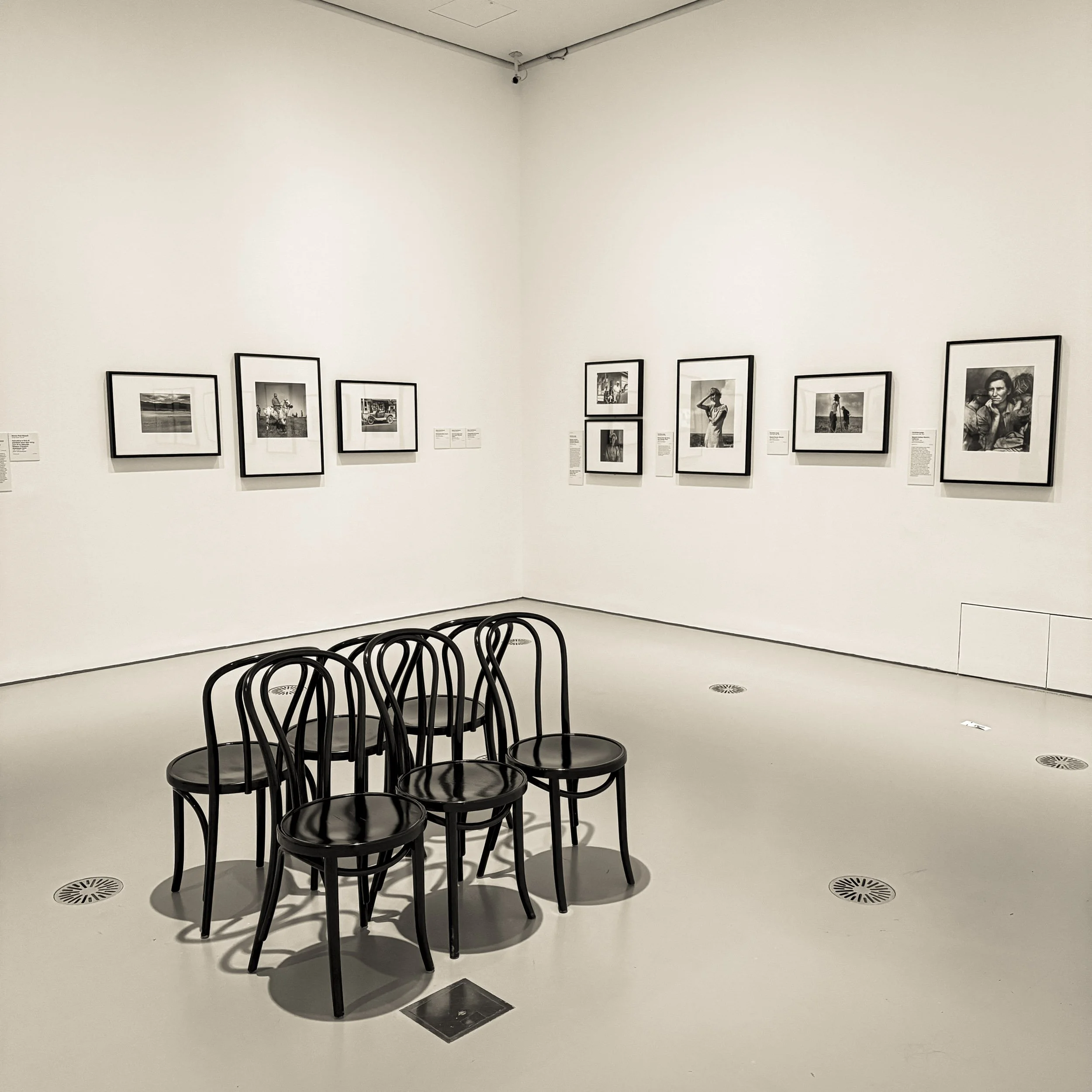
Women Photographers 1900 - 1975, A Legacy of Light at the National Gallery of Victoria
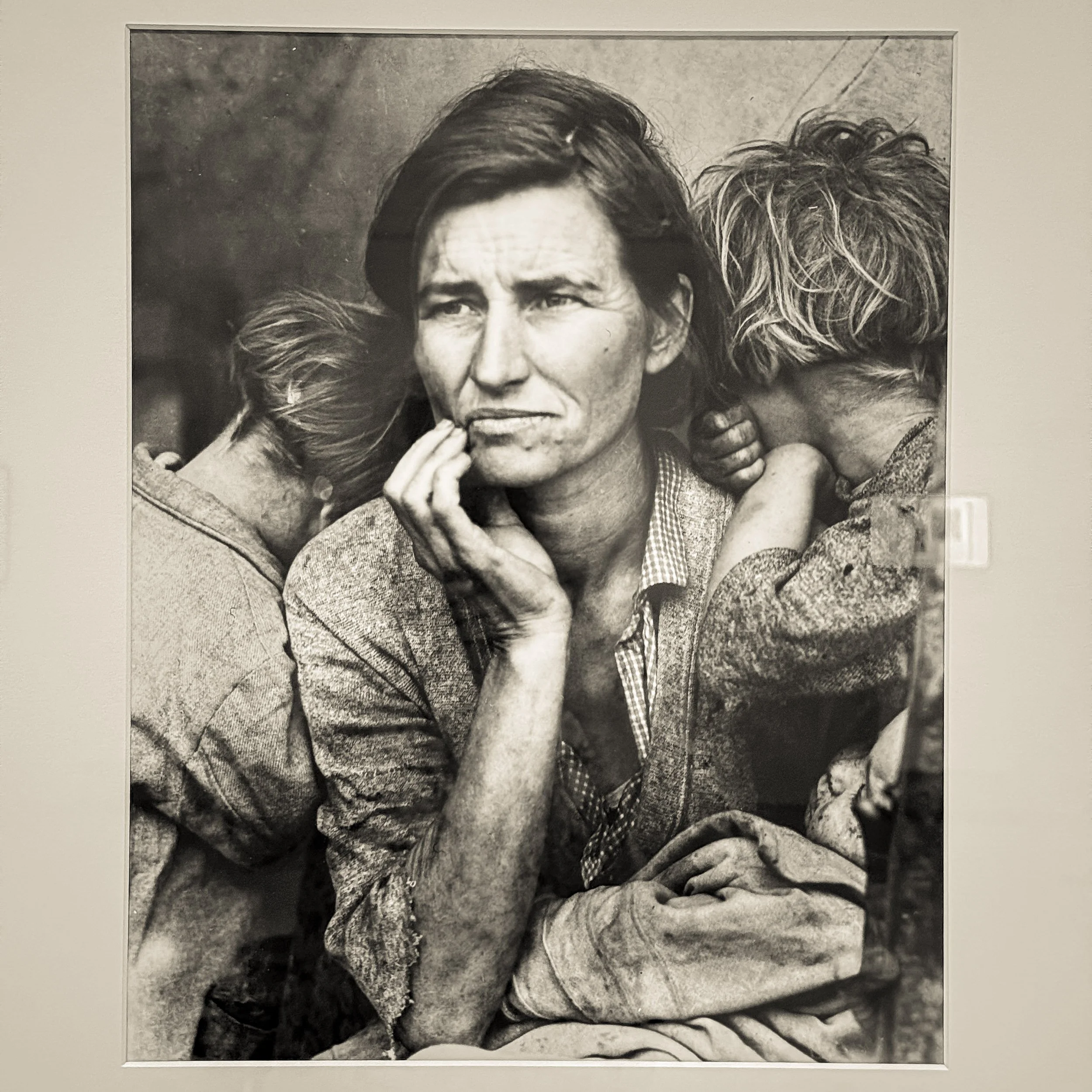
Dorothea Lange
United States 1895-1965
Migrant mother, Nipomo,
California
1936, printed c. 1975 gelatin silver photograph
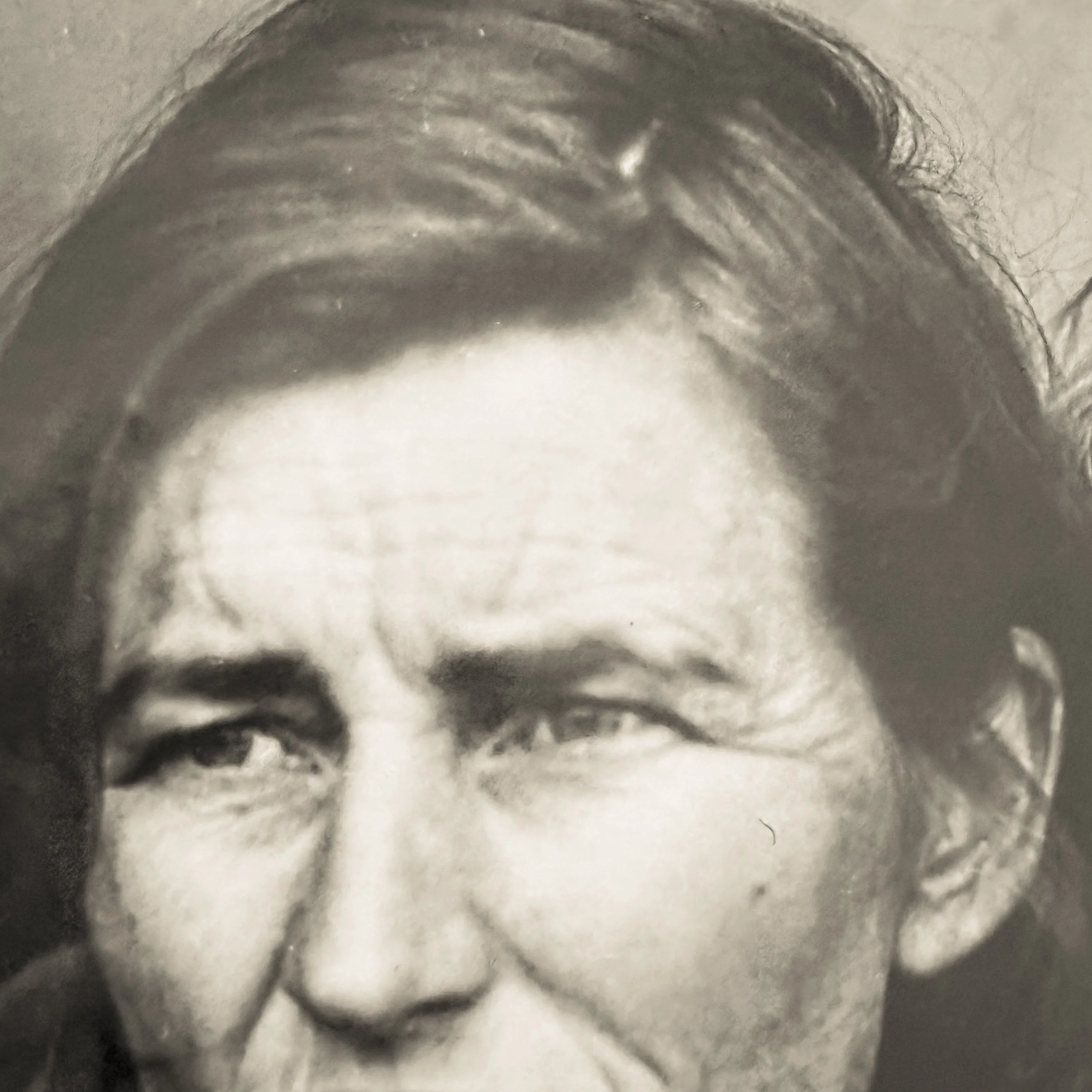
here you can see her hair in focus and her face is beautifully soft and full of emotion
Dorothy Lange